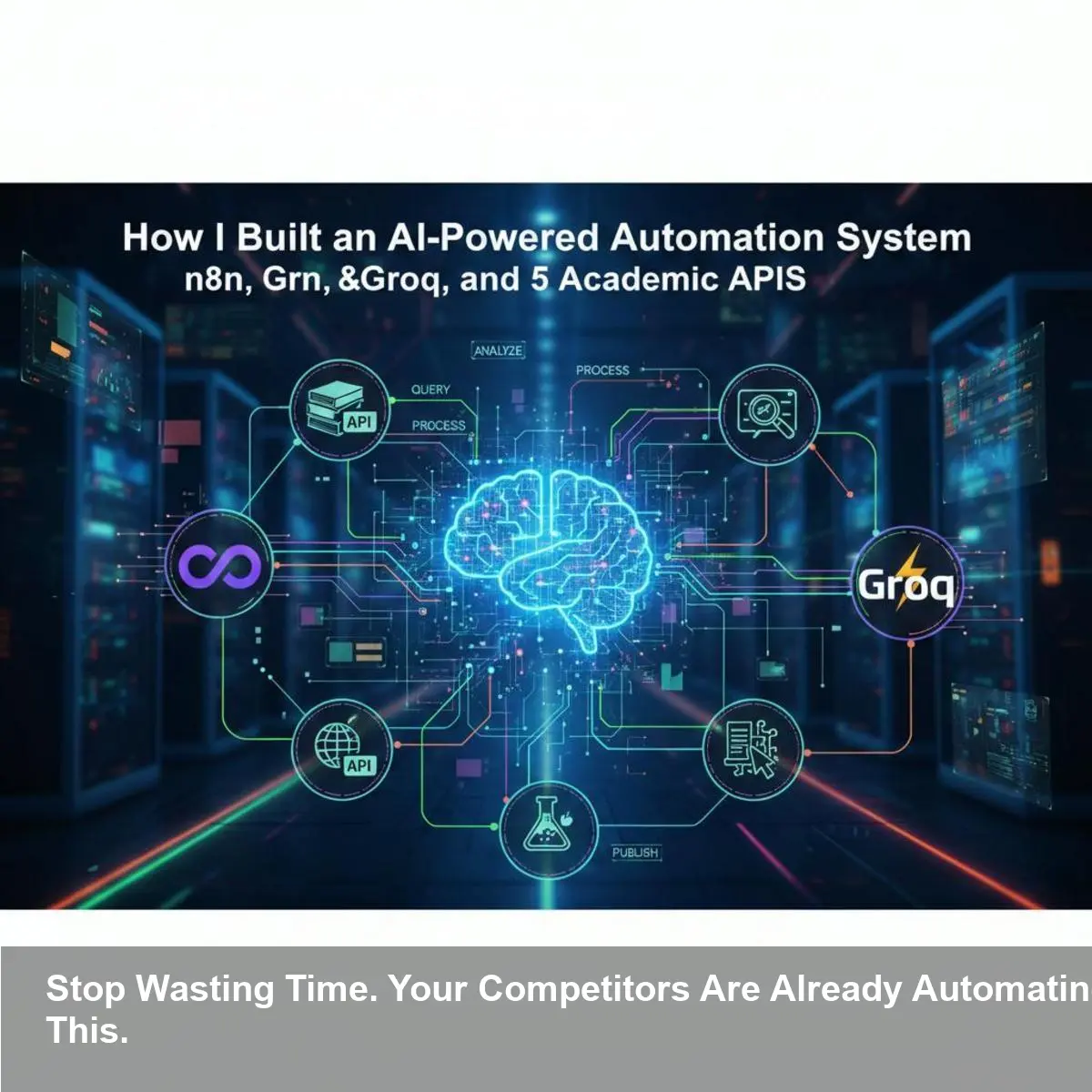
- A new automated system combines n8n, Groq, and academic APIs to revolutionize the research process.
- The workflow leverages n8n’s low-code platform to connect data sources with Groq’s high-speed AI for analysis.
- This powerful integration drastically reduces manual effort, saving researchers hundreds of hours.
- The system automates fetching, processing, and summarizing scholarly articles, delivering insights in minutes.
The End of Tedious Research As We Know It
The days of spending endless hours sifting through academic journals and databases are numbered. A groundbreaking approach to research automation has emerged, combining the power of low-code platforms with blazing-fast AI inference. By integrating n8n, the Groq LPU™ Inference Engine, and five different academic APIs, a powerful system has been built to automate the entire research lifecycle, a process many believed was too complex to systematize.
Unpacking the Tech Stack: How It Works
This innovative solution proves that you no longer need a team of developers to build sophisticated AI tools. The system is a masterclass in efficiency, leveraging specialized components to handle different parts of the research process.
H4: n8n – The Automation Backbone
At the heart of the system is n8n, a workflow automation tool that acts as the central orchestrator. It connects the various services through a visual, node-based interface. n8n initiates the process by taking a research query and then systematically calls upon multiple academic APIs to gather a comprehensive dataset of relevant articles and papers. Once the data is collected, n8n seamlessly passes it to the next stage for analysis.
H4: Groq – The High-Speed AI Brain
Once the raw data is compiled, it’s sent to an LLM running on the Groq LPU™ Inference Engine. Groq is renowned for its incredible processing speed, allowing it to analyze and summarize vast amounts of text almost instantaneously. This is where the magic happens: the AI sifts through the dense academic literature, extracts key findings, identifies themes, and synthesizes the information into a concise, digestible summary. This step alone replaces what would typically take a human researcher days or even weeks to complete.
H4: Academic APIs – The Fountains of Knowledge
The system’s intelligence is fueled by data. By tapping into five distinct academic APIs (such as those from sources like PubMed, arXiv, or IEEE Xplore), the workflow ensures a broad and unbiased collection of research material. This multi-source approach prevents informational silos and provides a more holistic view of the topic at hand, leading to richer and more reliable insights.
Why This Changes Everything
The implications of this system are massive. For academics, students, and market researchers, it represents a monumental leap in productivity. What was once a daunting manual task is now a streamlined, automated process. This not only accelerates the pace of discovery and innovation but also democratizes access to high-level research capabilities. By leveraging low-code and accessible AI, similar systems can be adapted for virtually any field, from legal precedent analysis to financial market research. The era of AI-powered research is here, and those who fail to adapt risk being buried under an avalanche of data they can no longer process manually.
Image Referance: https://hackernoon.com/how-i-built-an-ai-powered-research-automation-system-with-n8n-groq-and-5-academic-apis?source=rss