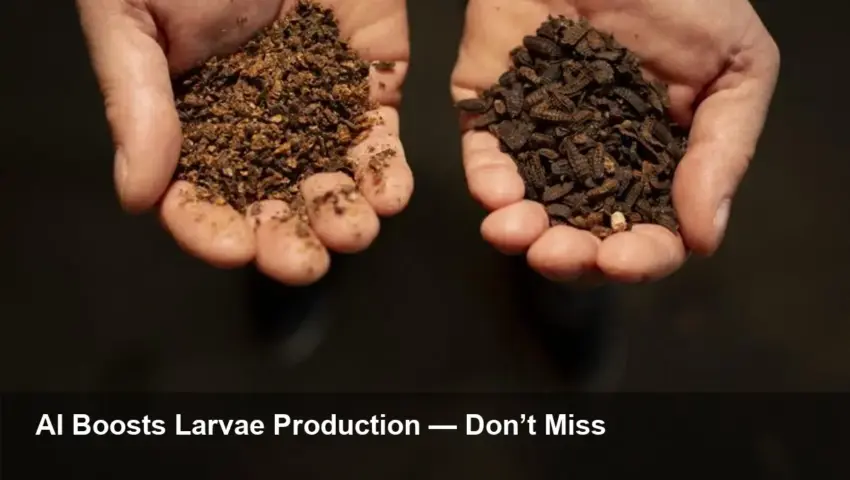
- European project will develop a precision intelligent system to optimize industrial black soldier fly (BSF) larval production.
- The effort focuses on applying AI and advanced automation to improve efficiency, consistency and traceability in large‑scale breeding.
- Better control of environmental and operational variables could reduce waste, biosecurity risks and labor costs for insect producers.
What the project will do
A new European project aims to create a “precision intelligent system” that applies artificial intelligence and advanced automation to black soldier fly (BSF) breeding. The initiative targets industrial larval production—using sensors, data analysis and automated controls to make breeding more efficient and more traceable.
Why this matters now
Black soldier fly larvae are increasingly used as a protein source in animal feed and as a tool for organic waste recycling. But scaling production to industrial levels exposes operators to variability in yields, labor bottlenecks and gaps in traceability that can undermine quality and regulatory compliance. By combining AI with automation, the project seeks to standardize production workflows, detect anomalies faster and keep better records across the supply chain.
Problems the system is designed to address
- Production inefficiencies caused by changing environmental conditions and inconsistent feed inputs.
- Labor intensity and the repetitive tasks that slow scale‑up.
- Traceability shortfalls that make it hard to document provenance, compliance and biosecurity measures.
How AI and automation could help
Although detailed technical plans have not been published in the source used here, the concept centers on three capabilities common to precision production systems:
- Data-driven optimization: AI models can analyze environmental and operational data to recommend feeding schedules, temperature and humidity setpoints, and harvest timing that maximize larval growth and uniformity.
- Automated control: Robotics and actuators can carry out repetitive tasks—feed dispensing, substrate handling, or automated sorting—reducing manual work and human error.
- Digital traceability: Integrated sensors and data logs create an auditable trail from waste inputs to finished larvae, helping producers meet regulatory and buyer requirements.
Who stands to gain—and the risk of falling behind
Producers, feed manufacturers, waste processors and buyers of insect protein could all benefit from higher yields, lower unit costs and stronger provenance records. Conversely, companies that delay adopting such systems risk losing efficiency and market access as buyers increasingly demand traceable, consistent supplies.
Next steps and outlook
As the project progresses, stakeholders will watch for pilot results that demonstrate measurable improvements in yield consistency, cost per kilogram of larvae and traceability. If successful, this precision intelligent approach could accelerate industrial adoption of BSF production and make insect‑based protein more competitive in feed markets.
For now, the announcement signals growing interest in applying digital and automation technologies to insect farming—a space where small operational gains can have outsized commercial and environmental impacts.
Image Referance: https://www.aquafeed.com/products/suppliers-news/european-project-to-apply-ai-and-advanced-automation-to-black-soldier-fly-breeding/