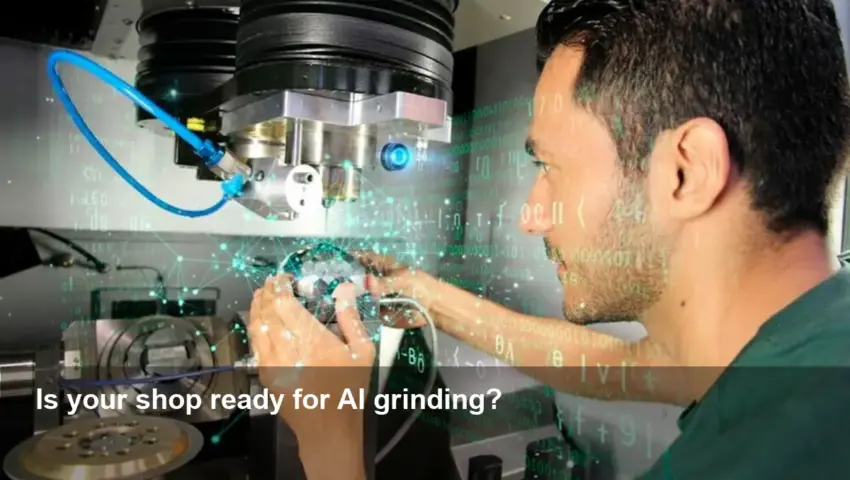
- Grinding Hub 2026 put AI-driven closed‑loop grinding center stage, emphasizing sensors and automation.
- Closed‑loop systems use real‑time data and AI to adjust grinding parameters, improving consistency and reducing scrap.
- Adopting sensor networks and edge analytics can cut downtime and extend wheel life — shops that delay may lose competitiveness.
- Manufacturers should assess data infrastructure, workforce skills and retrofit options now.
What Grinding Hub 2026 highlighted
The show underscored a clear trend: grinding is moving from manual setup and periodic inspection to continuous, AI‑assisted control. Exhibitors and sessions focused on pairing high‑resolution sensors with machine control and analytics to create closed‑loop grinding systems that monitor the process and adapt in real time.
How closed‑loop grinding works
In a closed‑loop grinding setup, sensors — measuring force, vibration, acoustic emissions, temperature and wheel condition — feed live data to control software. AI models interpret that data, detect drift or tool wear, and send corrective commands to adjust feed rate, wheel speed or coolant flow. The feedback loop runs automatically rather than waiting for manual intervention after quality checks.
Why this matters for manufacturers
Adopting closed‑loop grinding delivers three practical advantages: more consistent part quality, lower scrap and fewer unplanned stops. For precision industries — automotive, aerospace, bearings and tooling — those gains translate directly into lower per‑part cost and higher throughput. The event framed this shift not as optional innovation but as an operational necessity for plants that must remain competitive.
Risks of delay
Companies that postpone sensor and AI upgrades risk falling behind peers who gain efficiency and reduce waste. Beyond lost productivity, there’s a strategic cost: suppliers that can’t reliably meet tighter tolerances may be excluded from high‑value contracts.
Implementation considerations
Practical adoption often requires three elements:
- Sensors and data capture: reliable, repeatable measurements placed at critical points in the process.
- Data infrastructure and analytics: edge computing to process data quickly and models that translate signals into corrective actions.
- Skill and change management: operators and engineers trained to validate AI outputs and maintain systems.
Retrofits can make sense where full machine replacement is impractical: adding sensors and a control layer can unlock closed‑loop capabilities without wholesale capex. At the same time, greenfield plants can design systems around data flows from the start.
What to watch next
Expect suppliers to push integrated packages — sensor suites plus pre‑trained analytics — and to highlight measurable ROI in scrap reduction and cycle‑time improvements. For manufacturers, now is the moment to pilot closed‑loop grinding on representative parts and build the data and skills foundation before wider rollout.
Overall, Grinding Hub 2026 painted a clear picture: AI, sensors and automation are not peripheral tools but core enablers of modern precision grinding. The message to industry is straightforward — evaluate, pilot and adapt now or risk ceding ground to more agile competitors.
Image Referance: https://www.etmm-online.com/grinding-hub-2026-ai-sensor-tech-automation-a-8da38379033dca163bd6ae5c93944259/