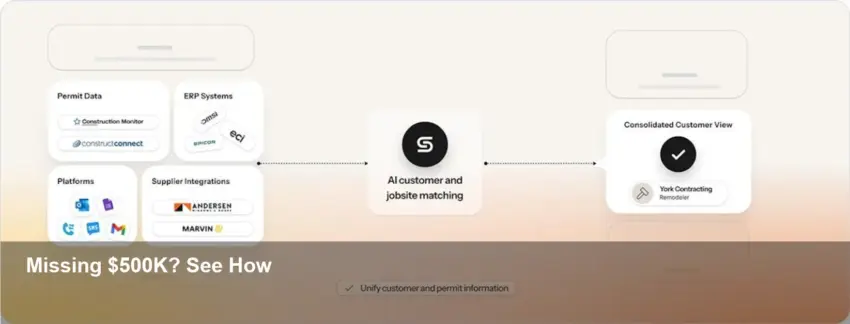
- PARR moved its sales team from passive order-taking to active hunting by using SalesJack’s AI-driven, permit-based lead delivery.
- SalesJack delivers high-quality, permit-driven leads weekly, putting near-term projects directly in front of PARR’s sellers.
- The change in culture and process produced more than $500,000 in new revenue in under six months.
How a weekly lead feed flipped PARR’s sales playbook
PARR’s shift was operational and cultural: instead of waiting for customers to call, the team began hunting — systematically contacting high-intent prospects identified from building permits. SalesJack provided a steady weekly stream of those permit-driven leads, giving PARR a predictable, actionable pipeline.
Why permit-driven leads matter
Permits point to real, soon-to-start construction and renovation projects. That intent signal is more reliable than scraped data or cold lists. By focusing outreach on active permits, PARR’s salespeople were able to reach decision-makers at the moment projects were moving from plan to action — when budgets and contractors are being set.
Immediate business impact
The results were rapid: the team’s proactive outreach converted into more bids, faster deal cycles and, critically, more closed business. According to the case details, PARR recorded over $500,000 in new revenue in under six months after adopting the weekly permit-driven leads. That kind of near-term return erased the main objection many teams have about investing in new lead systems — the wait for payoff.
What changed inside the sales team
Beyond the revenue number, the more important outcome was behavioral. Sellers who used to act as order-takers started prioritizing outbound work, qualifying permits, and following up consistently. This shift in habits is often the difference between sporadic wins and repeatable growth.
Why other businesses should pay attention
The PARR example shows a clear path for contractors, lumber dealers and B2B sellers in built-environment markets: pair intent-rich data (permits) with a lightweight delivery cadence (weekly), and train reps to hunt. The risk of sticking with reactive sales is simple — missed opportunities and slower growth. Companies that move first get the early pipeline and learning curve advantage.
Practical next steps
For teams considering the approach: start small with a focused geography or product vertical, confirm permit quality and cadence, and set measurable outreach goals for the first 90 days. Track lead-to-bid and bid-to-close conversion to see if the permit signal converts for your market.
PARR’s case is a concise example of how combining AI-driven lead identification with a weekly delivery rhythm can change both culture and revenue quickly — and why waiting may mean losing business to competitors who already adopted the model.
Image Referance: https://www.lbmjournal.com/resources/partner-content/article/15816673/sales-jack-from-permits-to-profit-how-ai-is-driving-real-sales-growth-at-parr